In This Article
Occupied renovations require more than construction expertise. They require careful planning to keep people, operations, and critical services running throughout the project.
In this article, you’ll learn:
- Why occupied renovations require a different approach than work in vacant buildings.
- The biggest operational concerns facility owners should address before construction begins.
- How preconstruction planning reduces disruption and project risk.
- Why communication is just as important as construction.
- What successful occupied renovations have in common.
Every occupied building has a job to do.
Classrooms still need to hold classes. Research labs still need to operate. Patients still need care. Employees still need to work, and the public still needs access.
At the same time, aging buildings still need new roofs, upgraded infrastructure, modernized HVAC systems, and renovated interiors.
That’s the challenge of an occupied renovation. An occupied renovation is a construction project completed while a building remains open, operational, and serving the people who depend on it every day, whether that’s a university, healthcare facility, courthouse, library, fire station, or office building.
Most facilities can’t simply shut down for six months while construction takes place. The work has to move forward while the building continues serving its purpose.
That’s what makes occupied renovations different, and why they require a different approach.
Renovation Isn’t the Challenge. Keeping the Building Operational Is.
The hardest part of an occupied renovation isn’t completing the construction. It’s keeping the building operating while the work is underway.
Replacing an air handling unit, modernizing an elevator, restoring a historic façade, or renovating office space isn’t inherently difficult.
The challenge is completing that work while protecting the people and operations inside the building.
Every decision should answer questions like:
- Can students still get to class?
- Can faculty continue teaching and researching?
- Can patients safely receive care?
- Can employees access the spaces they need?
- Can the facility continue serving its mission throughout construction?
Those are the questions that define a successful occupied renovation.
What Keeps Facility Owners Up at Night?
Facility owners are usually less concerned about the construction itself than they are about the impact it will have on daily operations.
Questions like:
- Will the building remain operational?
- Will occupants be safe?
- Will critical systems stay online?
- Will we have to relocate departments?
- What happens if an unexpected condition is discovered?
- How much disruption should building users expect?
- Will the project impact our ability to serve students, patients, staff, or the public?
Those concerns are valid. And they should be addressed long before demolition begins.
The Most Successful Occupied Renovations Are Won Before Construction Starts
Successful occupied renovations are planned long before the first crew arrives on site.
The best projects aren’t won by reacting to problems in the field. They’re won through disciplined preconstruction planning that identifies operational risks, coordinates phasing and shutdowns, prepares for the unexpected, and keeps owners and occupants informed every step of the way. The more planning completed before construction begins, the more predictable the project becomes.
Every Building Has Different Priorities
Every occupied building has a different mission, and the construction plan should be built around protecting it.
For example:
- Universities need to protect classes, research, and student access.
- Healthcare facilities must maintain patient care, infection control, and critical systems.
- School districts often have limited summer construction windows.
- Courthouses must maintain security, public access, and daily operations.
- Fire stations must remain ready to respond to emergencies.
No two facilities operate the same way. Construction planning should reflect those operational priorities rather than applying a one-size-fits-all approach.
Project Spotlight: Protecting Critical University Research During Electrical Infrastructure Upgrades
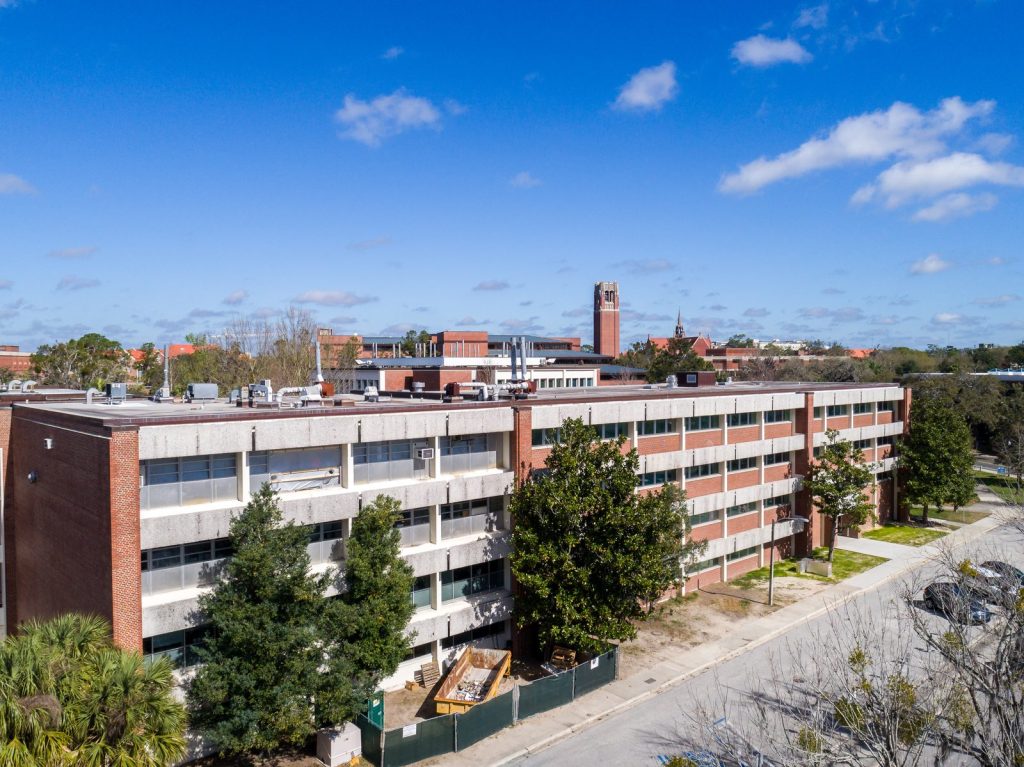
Project: University of Florida McCarty D Building & Food Science and Human Nutrition Building
One of the best examples of an occupied renovation isn’t a renovation at all. It was a complex electrical infrastructure upgrade inside two active University of Florida research facilities where uninterrupted power wasn’t just a convenience, it was essential to protecting years of research.
The Challenge
Both buildings remained fully operational throughout construction. Faculty, staff, and graduate researchers continued working in laboratories housing specialized equipment, temperature-sensitive materials, and ongoing research.
Even a brief, unplanned power interruption could have damaged equipment, compromised years of research, or created significant financial losses.
The Plan
Success depended on planning long before the first scheduled outage.
BBI worked closely with University staff and researchers to:
- Identify critical equipment and laboratory operations.
- Develop detailed outage and sequencing plans.
- Coordinate work around research schedules.
- Install strategically placed temporary generators to maintain power.
- Communicate planned outages well in advance.
- Prepare contingency plans for every phase of the work.
Every decision was made with one objective in mind: protecting the University’s research mission while completing the electrical upgrades safely and efficiently.
Protecting Operations
Throughout construction, the team continuously monitored temporary power systems, electrical infrastructure, and laboratory environments.
Research spaces were routinely checked to verify acceptable temperatures, while ongoing communication with facility personnel allowed adjustments to be made quickly whenever needed.
The Outcome
The electrical upgrades were completed successfully while both facilities remained fully operational.
Researchers maintained access to their laboratories, critical equipment remained protected, and environmental conditions stayed stable throughout construction.
The project’s success wasn’t defined by the electrical work alone. It was the result of disciplined planning, detailed phasing, proactive communication, and a commitment to protecting the University’s operations every step of the way.
Communication Becomes Just as Important as Construction
Clear, proactive communication is one of the most important tools on an occupied renovation project.
Facility staff need to understand upcoming impacts. Occupants need to know what to expect. Owners need visibility into project risks, schedule changes, and operational impacts before they occur.
Occupants should never be surprised by construction activities affecting their space.
The best occupied renovation projects aren’t the ones without challenges. They’re the ones where challenges are anticipated, communicated, and managed before they affect building operations.
The Goal Isn’t Just Completing the Project
Success isn’t measured by finishing the renovation. It’s measured by how well the building continues serving its occupants throughout construction.
That requires a different mindset.
Instead of asking:
How do we complete this renovation?
The better question is:
How do we complete this renovation while protecting the people, operations, and mission of the facility?
That shift influences every decision, from planning and phasing to logistics, communication, and field execution.
Before Your Occupied Renovation Begins
Ask these questions before construction starts:
- Have we identified the building’s critical operations?
- Have facility stakeholders been involved in planning?
- Is there a detailed phasing plan?
- Are shutdowns fully coordinated?
- Have existing conditions been investigated?
- Is there a communication plan for occupants?
- Have contingency plans been developed?
- Are logistics and material deliveries coordinated around operations?
The earlier these questions are answered, the smoother construction typically goes.
The Bottom Line
Renovating an occupied building isn’t just about completing construction. It’s about protecting the people, operations, and mission that continue inside the facility every day.
That takes more than a good schedule. It takes disciplined planning, clear communication, and a construction team that understands how to work around ongoing operations instead of interrupting them.
Since 1978, BBI Construction Management has helped owners renovate universities, healthcare facilities, municipal buildings, and other occupied environments where operations simply can’t stop.
Planning an occupied renovation? Let’s talk before construction begins. We’ll help you identify operational risks, develop a phasing strategy, and build a plan that keeps your facility running while construction moves forward.
Frequently Asked Questions
An occupied renovation is a construction project completed while a building remains open and operational. Instead of relocating occupants or shutting down the facility, construction is carefully planned and phased to minimize disruption while allowing the building to continue serving its purpose.
Successful occupied renovations rely on detailed preconstruction planning, phased construction, clear communication, and close coordination with facility staff. The goal is to protect the building’s daily operations while safely completing the work.
Occupied renovation strategies are commonly used in universities, healthcare facilities, schools, courthouses, municipal buildings, libraries, office buildings, fire stations, police stations, and other facilities where operations must continue during construction.
The greatest risk isn’t the construction itself. It’s disrupting the people, services, or operations that depend on the building. That’s why planning, communication, and operational coordination are just as important as the construction work.
Planning should begin during preconstruction, before demolition or major construction activities start. Early planning allows the project team to develop phasing strategies, coordinate shutdowns, communicate with occupants, and identify operational risks before they affect the project.