In This Article
- Why hidden conditions are a normal part of renovation projects—not an exception.
- Common examples of existing conditions that aren’t reflected in building drawings.
- How early planning and investigation help reduce schedule, budget, and operational impacts.
- Why occupied buildings require a different approach to managing unexpected discoveries.
- How experienced renovation teams keep projects moving when the building reveals surprises.
Every renovation project has surprises.
Anyone who tells you otherwise probably hasn’t spent much time inside older buildings.
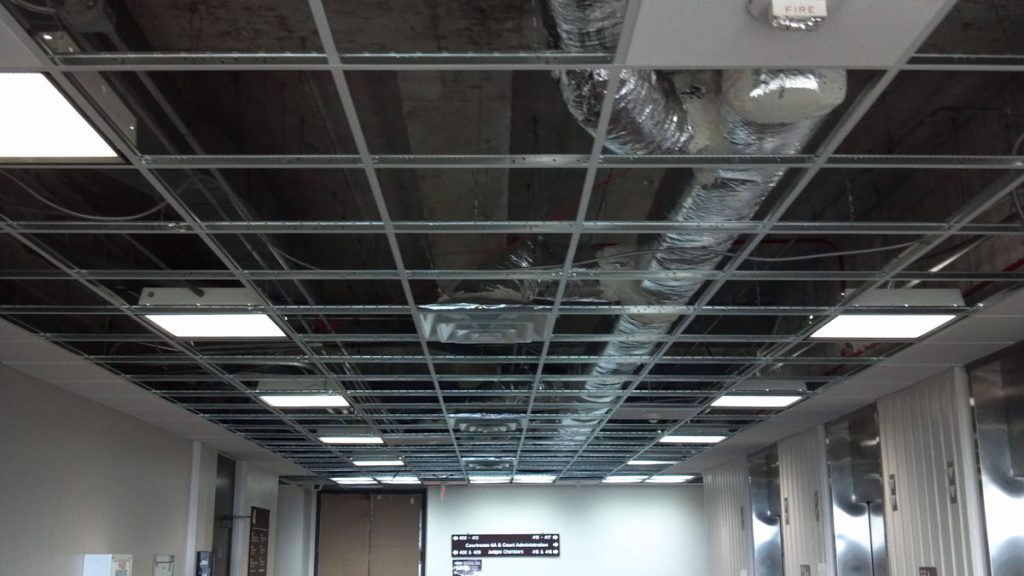
A few years ago, we opened a ceiling expecting to install new mechanical systems. Instead, we found existing conditions that didn’t match the available drawings.
Was it a crisis? No.
Was it unexpected? Absolutely.
That’s renovation construction.
Every building has a history. Some buildings have fifty years of history. Others have a hundred. Over time, systems get modified, utilities get rerouted, renovations happen, and documentation doesn’t always keep up.
When demolition starts, the building often reveals things nobody knew were there.
The owners who have been through major renovations understand this reality. The concern isn’t whether you’ll uncover something unexpected. The concern is whether that discovery will impact the schedule, budget, operations or even the relationship with the client.
That’s where experience matters.
The Building Doesn’t Always Match the Drawings
One of the most common challenges in renovation work is discovering that the building and the drawings are telling two different stories.
One of the most common challenges in renovation work is discovering that the building and the drawings are telling two different stories.
Common examples include:
- Utilities located where no drawings indicated they existed.
- Mechanical, electrical, or plumbing systems routed differently than expected.
- Hidden moisture damage concealed behind finished walls and ceilings.
- Structural elements that require changes to planned installation methods.
- Previous renovations that were never fully documented.
- Aging infrastructure that no longer matches original design documents.
None of these conditions are unusual, especially in buildings that have been renovated multiple times over the years.
The challenge isn’t discovering hidden conditions. The challenge is discovering them early enough to adjust the plan, minimize disruption, and keep the project moving.
That’s why so much of our work happens before construction begins.
The Value of Looking Before You Leap
A good renovation plan starts with asking questions.
What do we know?
What don’t we know?
What will our schedule be?
And where are the biggest risks hiding?
Before construction starts, our team invests time in understanding the building by:
- Reviewing available drawings and historical documentation.
- Walking the facility with owners and facility staff.
- Identifying existing conditions that warrant further investigation.
- Evaluating access, phasing, and operational constraints.
- Planning around the building’s day-to-day operations.
Facility staff often provide some of the most valuable project insight because they know things that never made it onto the drawings, including:
- Areas with recurring leaks or moisture issues.
- Equipment that has been modified or replaced over the years.
- Previous repairs, renovations, or undocumented changes.
- Operational challenges that could affect construction.
When schedules allow, we also recommend:
- Exploratory investigation.
- Selective demolition.
- Field verification of existing conditions before major work begins.
Historic Buildings Bring a Different Kind of Challenge
Some of the most interesting discoveries happen in historic buildings.
At Smathers Library, one of the project’s biggest challenges could not be fully identified until demolition began.
Because the building remained occupied during preconstruction, the existing window substrate conditions could not be thoroughly investigated before construction started. Once the existing windows were removed, the team discovered that portions of the substrate and attachments were inadequate to support the new windows and meet current code requirements.
For many projects, a discovery like that can create significant delays.
Instead, Superintendent Steve Jones worked closely with the architect and engineer to evaluate the condition, develop a revised attachment system, and implement a solution that met current code requirements while maintaining the project’s schedule and restoration goals.
This is a common reality in renovation work. Sometimes the most important conditions simply cannot be seen until demolition begins. The difference is having a team that can quickly evaluate the situation, collaborate on a solution, and keep the project moving forward.
Historic renovations require patience, flexibility, and a willingness to adjust the plan when the building reveals something important.
When Operations Can’t Stop
Hidden conditions become more complicated when people are still using the building.
At the Alachua County Civil Courthouse HVAC Replacement project, the facility remained active while multiple air handling units were replaced. Court operations continued. Security requirements remained in place. Building occupants still needed a safe and comfortable environment.
When unexpected conditions arise in a project like that, solving the construction problem is only part of the equation.
You also have to protect the operation.
The same is true in healthcare facilities, university buildings, fire stations, and municipal facilities.
Many of our clients cannot simply shut down a building while issues are sorted out.
The work has to move forward while operations continue.
That requires planning, communication, and the ability to make informed decisions quickly.
Hidden Conditions Are More Than a Construction Problem
When an unexpected condition is discovered, the impact often extends beyond the project itself.
For example:
- A university may need to protect ongoing research activities.
- A healthcare facility may need to maintain patient care areas and critical systems.
- A school district may have a narrow summer schedule before students return.
- A courthouse may need to maintain security and daily operations.
- A fire station must remain ready to respond at a moment’s notice.
In these environments, every construction decision affects people beyond the project team.
That’s why renovation planning must consider both the building and the operation it supports.
Why Renovation Experience Matters
One of the advantages of working with a team that specializes in renovation work is that we’ve seen many of these situations before.
Not the exact condition.
Not the exact building.
But the challenge itself.
We’ve worked in occupied courthouses, active university facilities, healthcare environments, residence halls, historic buildings, and municipal facilities.
The specifics change. The process doesn’t.
Identify the issue. Understand the impact. Develop options. Communicate clearly. Keep moving forward.
That’s how renovation projects stay on track.
The Real Risk
Owners often worry about hidden conditions, and that’s understandable. But on most renovation projects, hidden conditions aren’t the biggest risk.
The biggest risk isn’t finding an unexpected condition. It’s allowing that condition to disrupt the people who depend on the building every day.
That’s where experience, planning, and disciplined execution make the difference.
Renovation teams that specialize in occupied environments understand how to solve problems while protecting operations.
Buildings rarely give up all their secrets before construction starts.
The question isn’t whether you’ll find something unexpected.
The question is whether the people managing your project know what to do when you do.
Since 1978, BBI Construction Management has been helping owners navigate that uncertainty.
Because when you’re renovating buildings that never stop operating, experience isn’t a luxury.
It’s part of the plan.
Key Takeaways
- Hidden conditions are common in renovation projects, especially in older and previously renovated buildings.
- The goal isn’t to eliminate surprises; it’s to identify and manage them before they impact the project.
- Early planning, field verification, and collaboration with facility staff help reduce risk.
- Occupied facilities require solutions that protect both construction progress and day-to-day operations.
- Experienced renovation teams respond quickly, communicate clearly, and adapt without losing momentum.
- Successful renovation projects depend as much on planning and problem-solving as they do on construction.
Planning an Occupied Building Renovation?
Let’s talk before the walls come down.
Our team can help identify potential risks, develop phasing strategies, and create a plan that keeps your project moving while your facility continues to operate.
Frequently Asked Questions
Hidden conditions can impact schedule, budget, sequencing, and building operations if they are discovered late. Early investigation, thorough planning, and experienced construction management help reduce these impacts and keep projects moving forward.
Not all hidden conditions can be discovered before demolition begins, but many risks can be reduced through field verification, exploratory investigation, selective demolition, and collaboration with facility staff who know the building’s history.
Most renovation projects include an owner contingency to address unforeseen conditions. The goal isn’t to eliminate every surprise but to identify risks early, communicate them quickly, and manage contingency dollars strategically as conditions are uncovered.
Successful teams respond quickly by verifying the condition, evaluating options with the design team, communicating impacts to the owner, and adjusting sequencing when appropriate. Experience in renovation work allows many issues to be resolved while protecting the overall project schedule.
Hidden conditions are common in older buildings and facilities that have been renovated multiple times, including universities, healthcare facilities, courthouses, municipal buildings, libraries, residence halls, and other occupied public or institutional facilities.